Urban Studies
Course Title: Urban Sociology: Case Study Homewood-Brushton
Day and Time:
Urban sociology is a writing intensive course focusing on the study of metropolitan development, interaction and social Iife in the Chicago School tradition. The course is a practical introduction to theoretical and methodological issues in urban sociology. In addition to reading and discussing recent and traditional sociological literature, students will do a social research project focusing on the city of Pittsburgh. Working both individually and in small groups, students will operationalize empirical questions; collect evidence to test hypotheses; analyze the data using a variety of social science techniques, including quantitative methods and a form of ethnography known as participant observation (also called fieldwork); and produce reports of basic findings. An emphasis on the historical development of transportation, manufacturing, housing, governance, culture and inequality with regards to race, class, and gender will be discussed.
The Homewood-Brushton Project is designed to help students begin to develop their own informed perspectives on inequality in the U.S. by introducing them to the ways that urban sociologist deal with race, class, gender, sexuality, and social disparities. We will consider economic disparities both as a source of identity and social differentiation, as well as a system connected to privilege, power and inequality affecting everyone in the society, albeit in different ways.
Students will engage in a social research project, from conceptualization to a final report based on six topic areas (1. Economic development, 2. Education, 3. Labor and Employment 4. Housing, 5. Health Disparities, 6. Crime and Safety) as group, you will create a website related to your final group project. These projects will be presented to members of the Homewood-Brushton community. Contemporary and traditional literature will be considered and discussed. Ongoing student projects will be discussed and critiqued.
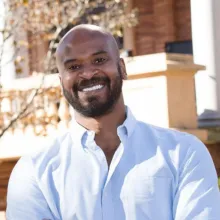
Waverly Duck
Waverly Duck is an urban ethnographer and the North Hall Chair Endowed Professor of Sociology at UC Santa Barbara. He is the author of No Way Out: Precarious Living in the Shadow of Poverty and Drug Dealing (University of Chicago Press, 2015), a finalist for the Society for the Study of Social Problems 2016 C. Wright Mills Book Award. His second book on unconscious racism, Tacit Racism, co-authored with Anne Rawls (also with the University of Chicago Press), was the 2021 winner of the Charles Horton Cooley Book Award from the Society for the Study of Symbolic Interaction and the 2022 Book Award winner for the North Central Sociological Association.