Black Communities in D.C.
Course Title: Beyond Mambo Sauce & Go-Go: The Black Experience in Washington, D.C . & Maryland
Day & Time: Tuesdays, 6:30 p.m. to 9:30 p.m.
Washington, D.C. and Maryland have long been home to pioneering and revolutionary African Americans like Frederick Douglass, Harriet Tubman, Mary McLeod Bethune, Paul Laurence Dunbar, Marvin Gaye, Ta-Nehisi Coates, among a host of others. Since the seventeenth century, African Americans have made an indelible mark on the region from cultivating Maryland’s cash crop—tobacco— to designing and constructing much of the National Mall, staffing integral federal agencies, and creating a rich cultural backdrop through music, food, dance, and art. This course will examine the social and cultural history of African Americans in Washington, D.C. and Maryland, while grappling with the politics of race, class, and place. Drawing on a range of historical, cultural, and political texts, throughout the quarter we will explore themes like slavery and abolition, race and housing, migration, Historically Black Colleges and Universities (HBCUs), Black electoral politics, race and public memory, community building, and social justice. With significant attention paid to space and place, each week we will delve into the community-making efforts of different historically Black neighborhoods from across the region—Hillcrest, Deanwood, U Street/Shaw, Anacostia, Prince George’s County, Maryland’s Eastern Shore—while contending with contemporary issues like gentrification, displacement, divestment, and climate change.
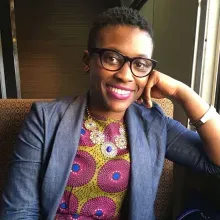
Jeanelle Hope
Dr. Jeanelle K. Hope is the Caterpillar Curator of Innovation and Entrepreneurship at the Smithsonian's National Museum of African American History and Culture (NMAAHC). My research and collecting interests are as follows: Black political thought, Afro-Asian solidarity, Black labor movements and organizations, Black inventors, and social movement history.